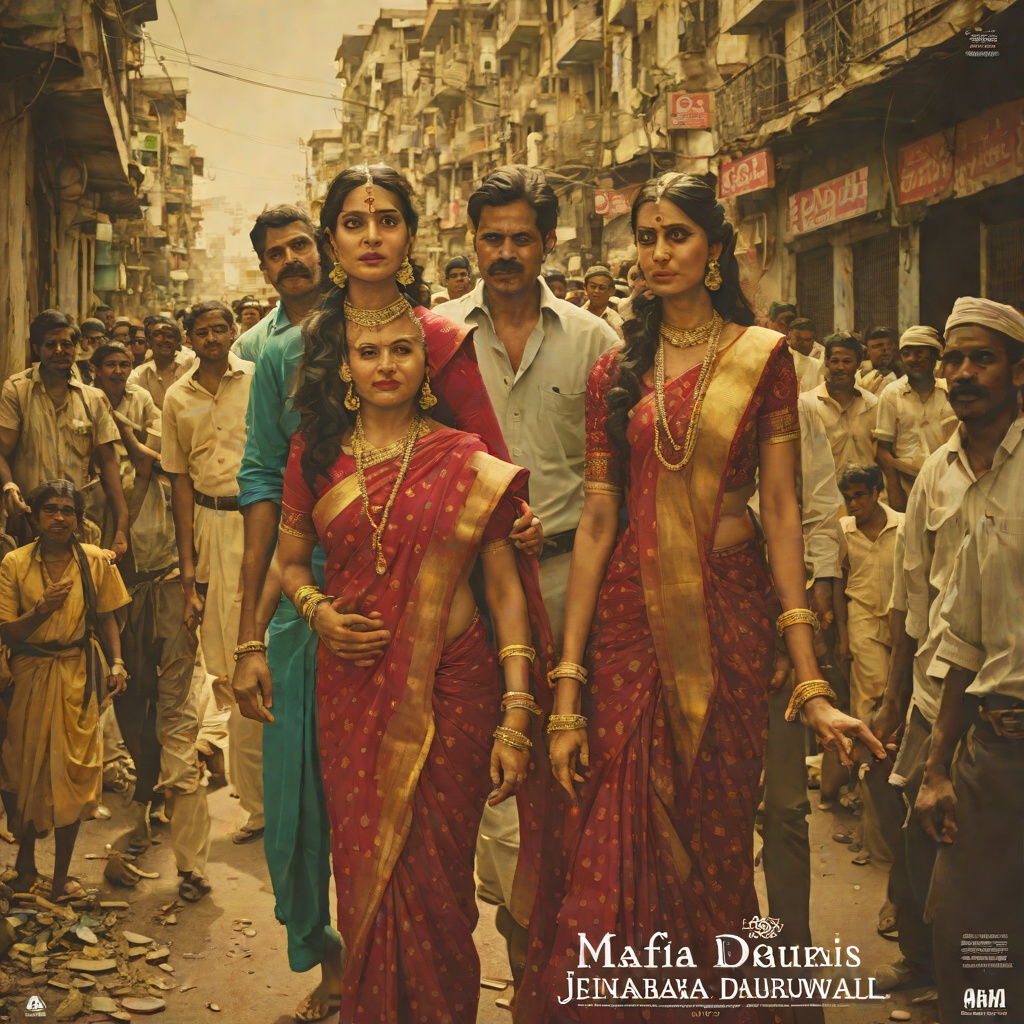
Chunawala Building
Mafia Queens of MumbaiThe Chunawala Building in Dongri is more than a residence; it is the fixed point around which the life of Jenabai Daaruwali, one of Mumbai's most formidable women criminals, revolved. It was here that she arrived as a fourteen-year-old bride, here that she raised five children while navigating the city's black markets, and here that she breathed her last in 1993. The building's enduring presence in the narrative of the city's underworld makes it a silent witness to the transformation of a young freedom fighter into a bootlegger and, finally, a peacemaker who could command the respect of warring gangsters.
A Home Forged in Marriage and Struggle
Jenabai's connection to the Chunawala Building began in the early 1940s when, at the age of fourteen, she was married to Mohammad Shah Darwesh, a small-time timber businessman. The couple moved into the first floor of the building, which was located in the same Dongri neighbourhood where she had grown up. It was within these walls that she bore her five children—Khadija, Iqbal, Salim, Kamaal, and Shammi—and continued her participation in the freedom struggle, a commitment that often led her husband to beat her for protecting Hindus during communal turmoil. The building was thus the backdrop for both her domestic life and her early political awakening, a space where the personal and the political were inextricably linked.
The Building as a Base for Illicit Trade
The Chunawala Building became the operational base for Jenabai's first foray into crime. After Partition in 1947, when her husband moved to Pakistan and left her to fend for herself and their five children, she began working as a broker for smuggled grain. She would procure foodgrain in bulk from wholesalers at Daana Bazaar on commission and sell it to dealers, as well as to the people who lived with her in the tenement. This trade was illegal, and the police raided her room in the Chunawala Building several times, but they never managed to gather enough evidence to book her. The building's cramped quarters, shared with other residents, provided a cover for her activities, making it a hub of illicit commerce that the authorities could not penetrate.
A Matriarchal Presence and a Final Stand
The building was also the site of Jenabai's most dramatic public act. During the 1992–93 Bombay riots, after the Suleman Usman Bakery firing on 9 January 1993, in which nine Muslims were killed by police fire, she stepped out of her home in the Chunawala Building. Dressed in a long white chikan nightgown and a shawl, with a rosary in one hand and a white flag in the other, she led a demonstration through the torched lanes of Dongri towards the Pydhonie junction. This act of defiance, born from her home, cemented her legacy as a peacemaker who was willing to risk her life to stop communal bloodshed.
A Legacy Etched in Memory
The Chunawala Building remained Jenabai's home until her death in 1993, a fact that underscores her refusal to leave her roots even as she accumulated wealth as an informer and bootlegger. Fourteen years after her death, her eldest daughter, Khadija, still lived in the same room on the first floor, having separated from her husband. The building, described as considerably old with only three floors, a narrow and steep flight of wooden stairs, and a pale white door protected by iron grills, serves as a tangible link to Jenabai's life. It is a place where the memory of a woman who pushed the boundaries of dominant moral codes is preserved, a testament to her enduring influence on the neighbourhood and the city's history.